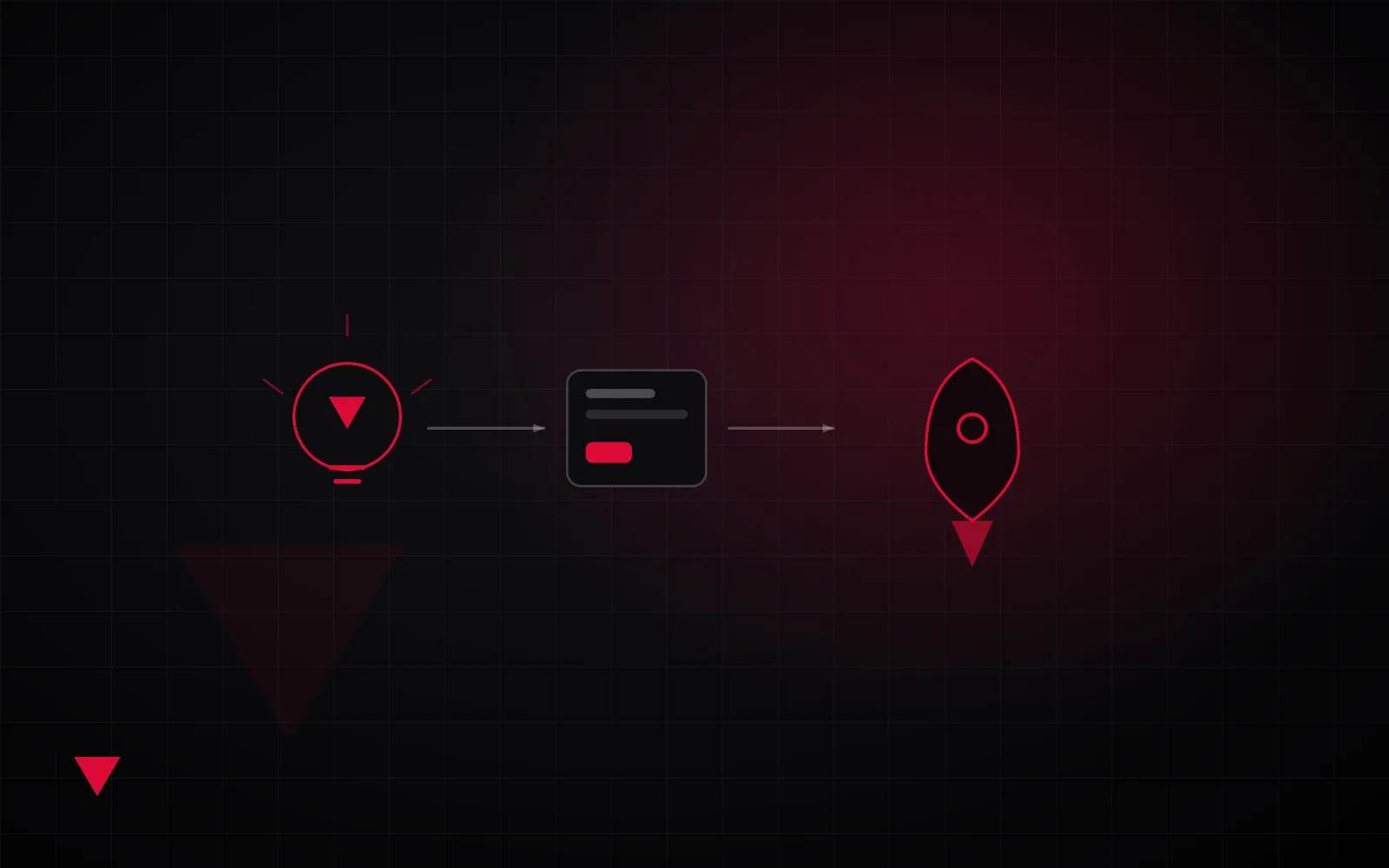
Every founder starts with a vision of the finished product. The mistake is trying to build it. The purpose of a minimum viable product isn't to launch a small version of your idea — it's to answer the riskiest question your idea depends on, as fast and cheaply as possible. Get that framing right and everything about building gets easier.
An MVP is a question, not a product
Ask yourself: what has to be true for this business to work? Maybe it's "will people pay for this?" or "can we deliver this reliably?" or "is this problem painful enough?" Your MVP should be the smallest thing that answers that question with real evidence. Anything beyond it is a bet you haven't earned the right to make yet.
What to build — and what to skip
The hard part of an MVP is discipline. For the first version, build only what tests your core assumption. Skip the settings page, the admin dashboard, the five payment options, the edge cases. Those feel like progress but they're often just avoidance — polishing details before you know the idea works.
- Build: the one core loop a user needs to experience your value.
- Fake: anything you can do manually behind the scenes at low volume.
- Skip: everything that only matters at scale you don't have yet.
Launch before you're ready
An MVP that isn't a little embarrassing was over-built. The point is to get it in front of real users quickly, watch what they actually do (not what they say), and let reality correct your assumptions. The founders who win aren't the ones who built the most — they're the ones who learned the fastest.
From MVP to real product
Once the core question is answered "yes," you've earned the right to build properly: hardening the architecture, adding the features real usage revealed, and scaling what works. The MVP got you the evidence; now you build on solid ground instead of guesses.
Turning an idea into a product? Explore our Custom Software services, see our Ventures, or read: Choosing the Right Tech Stack.